For Whom the Bell Tolls
An Affective Mapping of the Venice Art Biennale curated by Simona Munteanu
Venice, during the Art Biennale, becomes a city-artifact where the boundaries between exhibition, urban infrastructure, and everyday life dissolve, and the entire city functions as an extended organism of contemporary art. The Venice Biennale becomes an expanded experience in which the city no longer serves as a backdrop, but as an active part of the exhibition, while the route between Giardini, Arsenale, and the dispersed spaces across Venice constructs an affective mapping of contemporary art. In Minor Keys establishes a regime of perception in which the works operate through materiality, the body, and memory, transforming the act of visiting into a fragmented journey where the viewer becomes part of the very mechanism of display and, implicitly, the curator of their own experience.
A city break in Venice during the International Art Exhibition of La Biennale di Venezia no longer resembles the classic idea of “visiting”; it becomes a cultural break, because the city does not welcome you — it absorbs you.
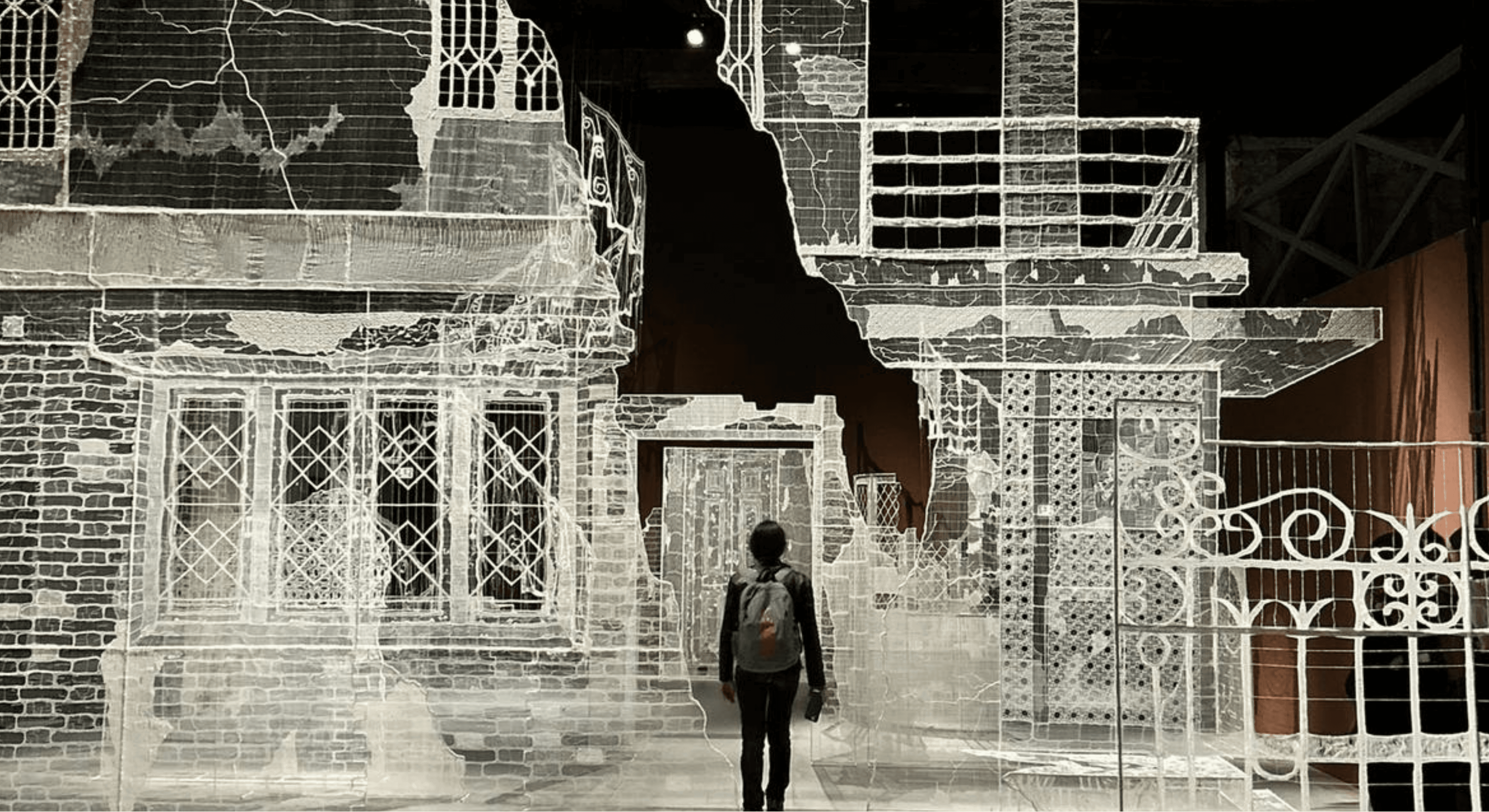
Everything begins before Giardini and Arsenale, and very quickly, you understand that these are merely points of orientation. The real Biennale is dispersed: in palaces, churches, hidden courtyards, warehouses, temporary islands of light and sound. Venice no longer functions as a backdrop for art; it becomes part of it.
The Venice Art Biennale
La Biennale di Venezia is one of the most important cultural institutions in the world, founded in 1895. Over time, it expanded beyond visual arts to include music, film, and theater.
The Venice Film Festival, launched in 1932, is the first film festival in history. The Architecture Biennale was inaugurated in 1980, and the Dance Biennale in 1999. In 2022, the Art Biennale attracted over 800,000 visitors.
The 61st International Art Exhibition takes place between May 9 and November 22, 2026, in Giardini, Arsenale, Forte Marghera, and numerous spaces throughout the city.
The theme of this edition, In Minor Keys, conceived by curator Koyo Kouoh and completed posthumously by her team, functions as a shift in frequency. You do not enter an exhibition, but a world that speaks quietly — sometimes almost inaudibly — about memory, loss, resistance, and repair.
In Giardini and Arsenale, the Venice Biennale brings together more than 110 artists and collectives from Africa, Europe, Asia, the Americas, and Oceania, confirming the global character of the edition curated by Koyo Kouoh. It also includes 100 national participations, alongside 31 collateral events unfolding throughout the city.
The 2026 edition takes place within an intense geopolitical climate in which art can no longer be separated from conflict.
The absence of the curator transforms the project into a posthumous undertaking, while the global context — marked by the war in Ukraine and the conflict in Gaza — radically alters the reading of the exhibition.
National participations are no longer simple cultural representations but become visible political positions. During the preview days, the Russian Pavilion was the site of a protest by the group Pussy Riot, while Israel’s presence generated coordinated actions by the Art Not Genocide Alliance (ANGA), leading to the total or partial closure of several pavilions, including Belgium, the Netherlands, Austria, Japan, North Macedonia, and South Korea. Other European and international spaces operated intermittently or with reduced schedules.
In this context, the Biennale no longer functions merely as a contemporary art exhibition, but as a space where art, activism, and cultural diplomacy overlap in real time.
Cultural Diplomacy: Giardini della Biennale
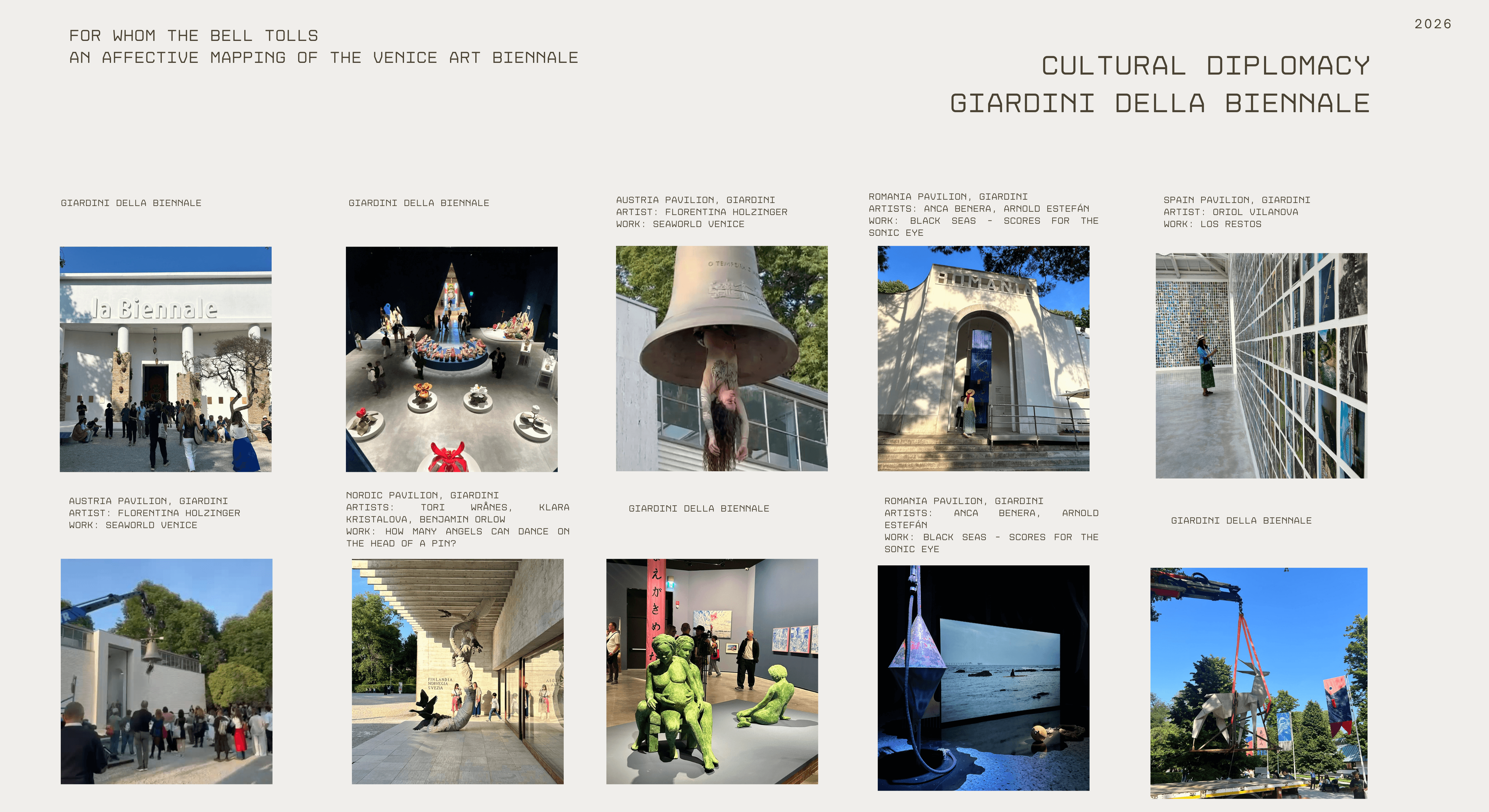
In Giardini, the Biennale preserves one of its most recognizable forms: the exhibition park where each pavilion becomes an autonomous universe. National architecture no longer functions as a boundary, but as a filter through which the same theme In Minor Keys is translated into different languages.
The central exhibition unfolds here like a constellation of works that do not demand a linear route. There is no correct direction for viewing, but rather a succession of spaces functioning as different states of the same idea: listening, fragility, and the relationship between body, environment, and memory.
In the Austrian Pavilion, Florentina Holzinger transforms the space into Seaworld Venice, a performative installation in which body, water, and technology intertwine within an unstable ecosystem. The work explores the body as artistic material and instrument, exposed to pressure and continuous transformation in an environment reminiscent of an industrial aquarium or a post-apocalyptic space. One of the central images of the project is that of a human body suspended inside a giant bronze bell, set into motion through direct contact, including extreme gestures of physical exposure, emphasizing the idea of vulnerability and the body’s total participation within the mechanism of the installation. Through its bodily and apocalyptic imagery, the Austrian Pavilion evokes echoes of scenes from The Last Judgment by Hieronymus Bosch, created around 1500.
In this context, the pavilion becomes an experience about the physical and symbolic limits of the human, where the boundaries between control and loss, nature and technology, gradually disappear within an intense and provocative choreography.
In the Belgian Pavilion, Miet Warlop presents IT NEVER SSST, a performative installation in which language progressively deteriorates. Words are carried, fragmented, and rearranged within a system oscillating between chaos and composition, while meaning is never definitively stabilized.
The works of Tori Wrånes, Klara Kristalova, and Benjamin Orlow construct, within the Nordic Pavilion, a space where body and architecture are subjected to a logic of pressure and instability. How Many Angels Can Dance on the Head of a Pin? treats space as a medium that compresses and expands depending on the presence of bodies and materials.
Resonant national discourses
The Romanian Pavilion, created by Anca Benera and Arnold Estefán, presents Black Seas – Scores for the Sonic Eye, where the Black Sea becomes a sonic and geopolitical archive. Sound, image, and material research overlap in a work that does not represent the sea, but listens to it, transforming it into a space of active memory and sedimented historical tensions.
In the Spanish Pavilion, Oriol Vilanova transforms the space into an “anti-museum” through the project Los restos, curated by Carles Guerra. The installation gathers thousands of postcards collected over more than twenty years, small objects sourced from flea markets and antique fairs, recontextualized as fragments of memory. Arranged in a continuous composition, they no longer illustrate places but become traces of time and forgetting, questioning the idea of a stable archive and the traditional museum.
ARSENALE The Architecture of Memory
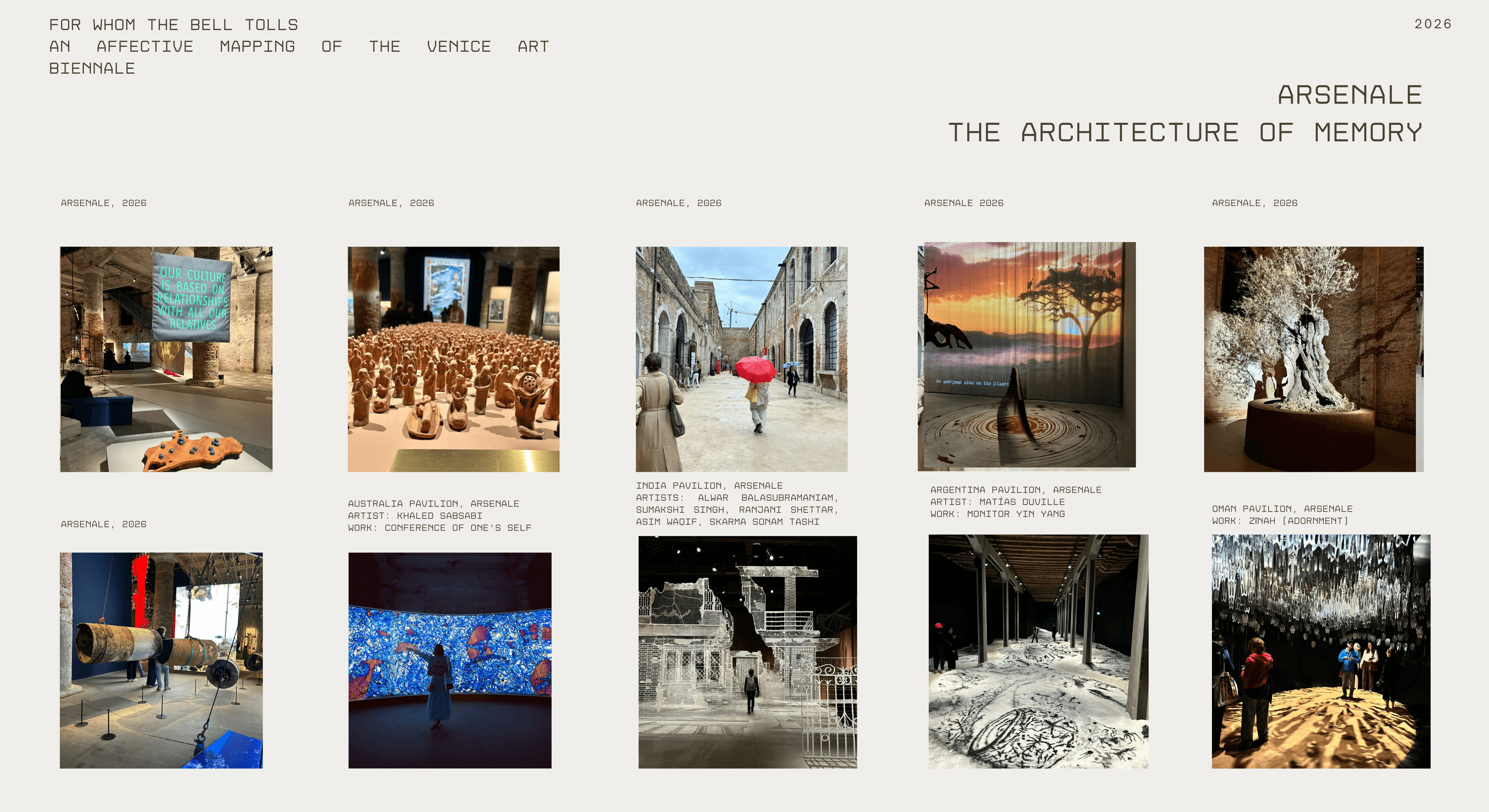
Arsenale complements Giardini as the second major nucleus of the exhibition In Minor Keys. The space carries a profound history tied to the identity of Venice: built beginning in the 12th century and expanded during the Venetian Republic, Arsenale was one of the largest naval and industrial complexes in premodern Europe. Military and commercial ships were produced here within a state-organized system that influenced early forms of industrialization and logistics.
Today, this historical infrastructure is reactivated as an exhibition space, preserving the memory of labor and production within large-scale contemporary installations.
Arsenale functions as a continuous route in which the visitor traverses monumental installations, performances, and multimedia structures emphasizing corporeality, memory, and geopolitical tensions.
If Giardini is fragmentation and plurality, Arsenale is density and continuity. Here, the works are expansive, immersive, and scenographic, constructing total environments in which sound, image, and space become inseparable.
In the Australian Pavilion, Khaled Sabsabi presents conference of one’s self, an immersive installation inspired by the Sufi poem The Conference of the Birds. Image, sound, and light do not illustrate an idea — they produce one. The experience unfolds slowly, like a meditation on migration, existence, and coexistence, where identity is no longer fixed but continuously transforming.
The Indian Pavilion, Geographies of Distance: Remembering Home, brings together artists Alwar Balasubramaniam, Sumakshi Singh, Ranjani Shettar, Asim Waqif, and Skarma Sonam Tashi in an exploration of the idea of “home” as fragile and material memory. Earth, fiber, wood, and transforming organic structures construct a space in which belonging is not fixed, but vulnerable and mobile.
In the Singapore Pavilion, Amanda Heng creates an installation based on the body as an instrument of attention and relation. Through slow movement and observation, the space becomes an exercise in presence and expanded perception, subtly altering the rhythm of the visitor.
In the Chilean Pavilion, Norton Maza presents Inter-Reality, an installation conceived as an immersive environment where image, object, and sound become layers of a multiple and unstable reality. The work explores the fragility of perception and overlapping perspectives, transforming space into an experience of controlled disorientation.
The Oman Pavilion presents Zīnah (Adornment), an immersive installation in which sound, sand, and metal are integrated into a participatory system of sensory experience. Ornamentation no longer functions as decoration, but as a relationship and resonance between body, space, and memory.
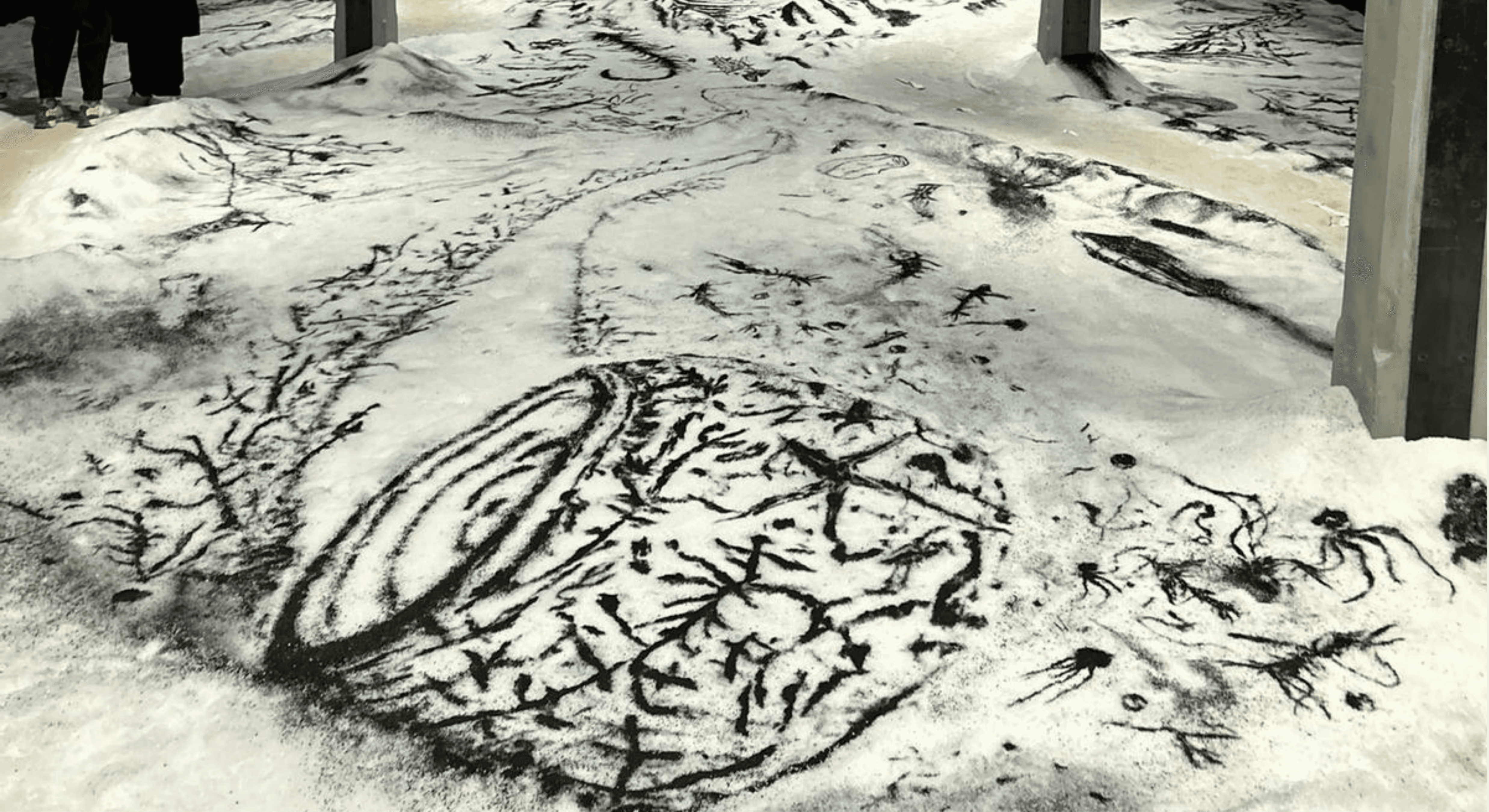
Within this register of elemental materials, Argentina shifts the emphasis from sand to salt, from the flow of the desert to the residue of the sea and geological time. The Argentine Pavilion centers on Matías Duville’s Monitor Yin Yang. The installation transforms the space into a traversable landscape of salt and coal, physically crossed by the visitor, who becomes an integral part of the composition. Conceived as a reflection on the present, the work explores the tension between ruin and potential, between energy and degradation, using Yin-Yang symbolism to suggest the fragile balance of the contemporary world, an immersive cultural landscape.
Venice, Baby
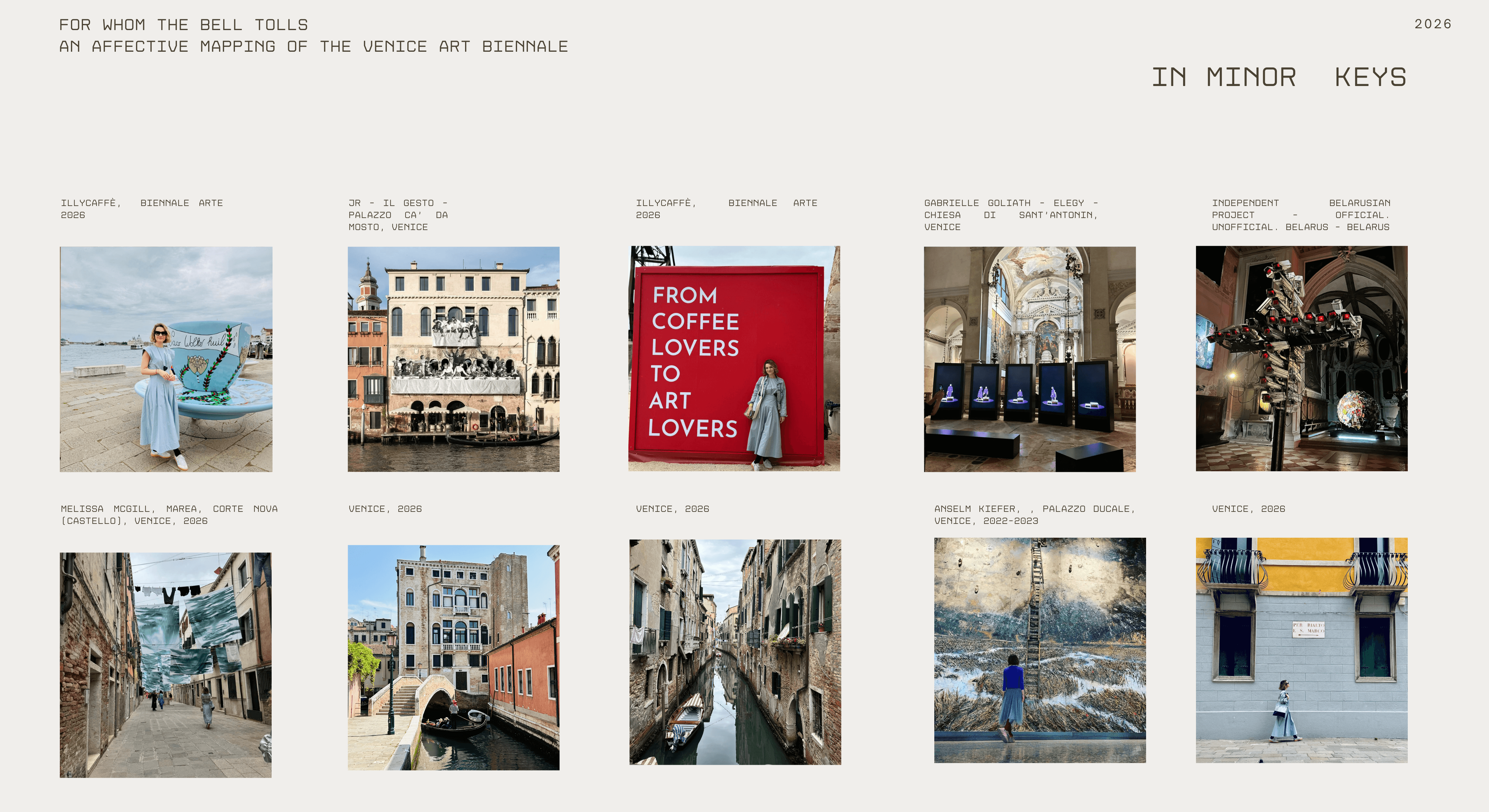
Leaving the official spaces behind, Venice invites you to wander and discover, inside a church in Cannaregio, how Gabrielle Goliath transforms sound into a ritual of memory and mourning. The voices do not “present” something; they sustain the duration of collective grief in a space where absence becomes present.
The city becomes a vibrant stage for exhibitions by some of the most influential contemporary artists of our time — including Anish Kapoor, Marina Abramović, Amoako Boafo, Flora Yukhnovich, Matthew Wong, Erwin Wurm, Lorna Simpson, Michael Armitage, Jenny Saville, and Lee Ufan. Their works unfold across palaces, churches, and historic venues, transforming the city into an immersive cultural landscape.
IL GESTO
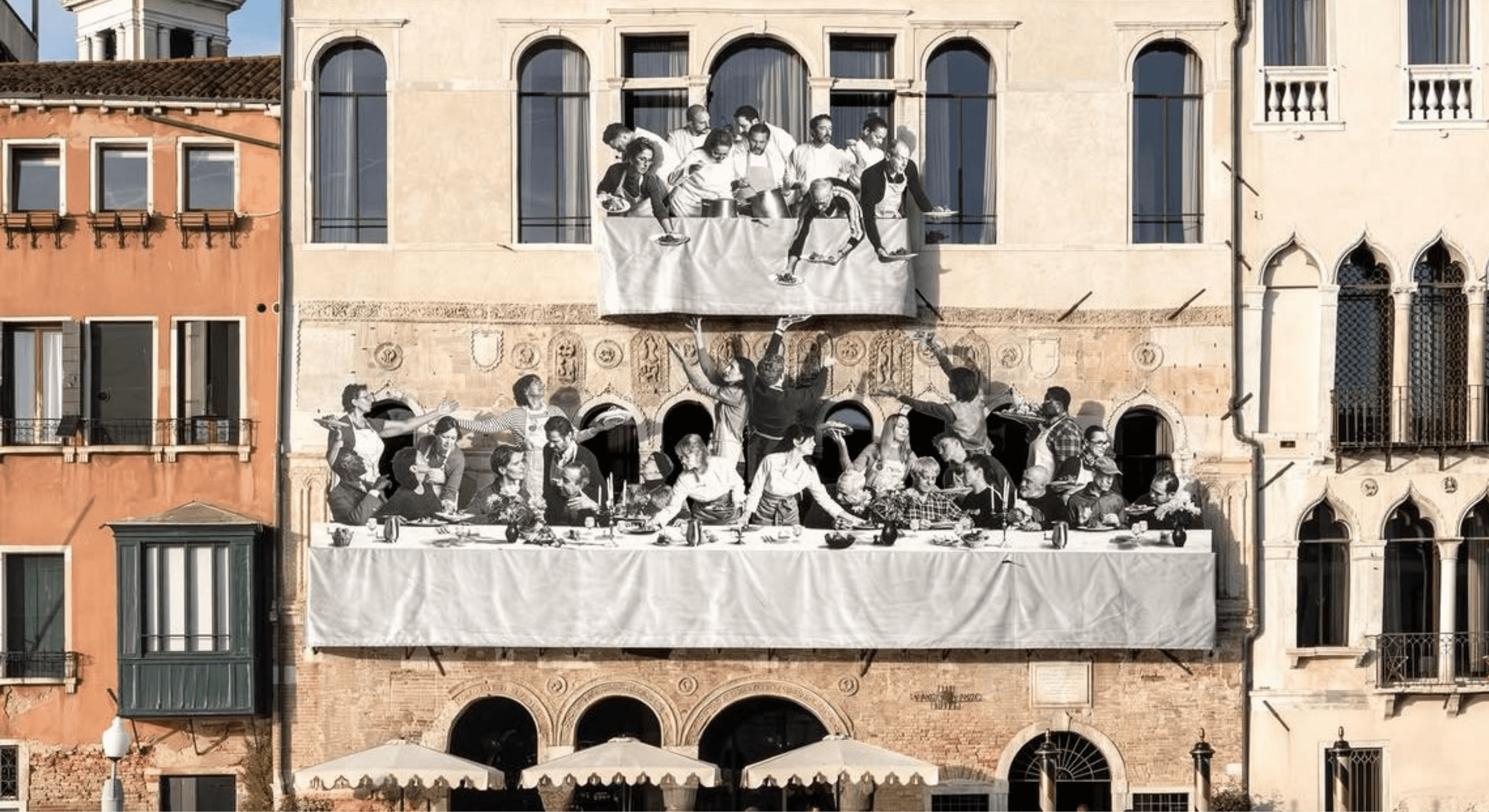
From a gondola or from the bridges, one can admire the façade of Palazzo Ca’ da Mosto, where JR presents Il Gesto, a work inspired by The Wedding at Cana, the famous painting created by Paolo Veronese for the monastery of San Giorgio Maggiore. The project brings together 174 members of the Refettorio Paris community, photographed individually and integrated into a collective composition transformed into a monumental tapestry produced by Fondazione Bonotto. Part of Il Gesto is installed on the façade of the palace, becoming a public intervention visible directly from the lagoon and integrating the work into the urban landscape of Venice.
At dusk, above the lagoon, Chris Levine projects Higher Power, a laser installation presented over the course of one week during the opening of the 2026 Art Biennale. The projection originates from the island of San Clemente and remains visible throughout the city until midnight, transforming the Venetian sky into an active surface of light and collective attention.The work employs a modified military-grade laser system developed together with engineers and physicists from Germany. At certain moments, the beam appears as a vertical line rising into the atmosphere; at others, it forms a luminous ring suspended above the water, clearly defined like a halo.
The effect depends strongly on weather conditions and airborne particles, which capture and diffuse the light, making it visible from different points throughout the city. Viewed from canals and bridges, the circle appears suspended above Venice like an architectural drawing traced directly onto the sky.
At another point along the exhibition route, DRIFT presents Shy Society at Palazzo Balbi (May 3–10, 2026), a kinetic light installation mounted directly onto the façade of a Venetian palace between the Peggy Guggenheim Collection and Ponte dell’Accademia, visible from the Grand Canal. The work transforms urban infrastructure into an active support for perception, where light and movement become a continuous choreography within public space.
URBAN ART
Created by the famous graffiti artist Banksy in May 2019 on the façade of Palazzo San Pantalon in Venice, “Migrant Child” was presented to the public for the first time after its removal and restoration during the preview days of the 61st International Art Exhibition of Venice. Acquired by Banca Ifis together with the historic building, currently undergoing redevelopment by Zaha Hadid Architects and Th&Ma Architettura, the artwork traveled through Venice’s canals before its planned reinstallation along the Rio di San Pantalon. The unveiling was attended by Luca Zaia, Ernesto Fürstenberg Fassio, Vittorio Sgarbi, and Nobel Peace Prize laureate Kailash Satyarthi, who emphasized the humanitarian message of the work. Conservator Federico Borgogni described the intervention as highly complex due to the deteriorated condition of the building, requiring structural consolidation with anti-seismic mortars and the careful removal of algae and lichens from the painted surface.
Heritage
Marea, a participatory project by artist Melissa McGill presented in Corte Nova (Castello district, Venice), transforms urban space into a public stage where hand-painted sheets, hung on traditional structures (tagge), become signals of neighborhood life and forms of protest against mass tourism and the ecological pressure of rising sea levels. The work is based on dialogue with local residents through interviews and collected memories, integrating an interdisciplinary approach that combines photography, performance, and immersive installation.
An essential element of the project is the use of water from the Venetian lagoon in the painting process, leaving direct material traces upon the fabrics and physically connecting the work to the environment in which it is created. Through the arrangement of the sheets, the project evokes the rhythms of water and affirms the presence of stable communities, transforming everyday gestures into a collective visual language and into a reflection on the fragility and resilience of the lagoon city.
At Palazzo Pisani Moretta, The Only True Protest Is Beauty proposes beauty as a form of resistance, while in the streets the city continues without program: sound installations emerge in hidden courtyards, light becomes a pathway, and water functions as a surface of memory.
Biennale Arte 2026 increasingly confirms the role of major brands in global cultural diplomacy. Bvlgari becomes the exclusive partner of the Biennale for the 2026, 2028, and 2030 editions, inaugurating its own exhibition pavilion in Giardini at Spazio Esedra. For this edition, the Maison presents a project by Lotus L. Kang built around the concept Freedom Creates, exploring memory, materiality, and creative freedom through site-specific installations.
BRANDS
At the same time, illycaffè continues the tradition initiated in the 1990s through the celebrated illy Art Collection, transforming the espresso cup into a support for contemporary art and social reflection. At the 2026 Biennale, artist Mohammed Z. Rahman presents Memento Vivere, an intervention that transforms the ritual of coffee into a meditation on labor, memory, and the colonial legacy hidden within global agricultural production chains.
In this context, the Venice Biennale may be understood as a concentrated form of cultural participation in which prolonged exposure to contemporary art simultaneously activates cognitive, emotional, and social registers. Within this logic, the Biennale exceeds the status of a simple exhibition platform, functioning instead as an intense space of interaction with multiple cultural practices that condense and amplify the experience of contact with art.
ART
This perspective is supported by a recent study conducted by researchers at University College London (UCL) and published in the journal Innovation in Aging, which demonstrates an association between engagement in artistic and cultural activities and a slower pace of biological aging. Based on data from more than 3,500 adults in the United Kingdom and epigenetic DNA analyses, researchers observed that individuals who frequently participate in activities such as visiting museums, listening to music, or reading exhibit biological markers associated with a younger age. The results suggest an effect comparable to that of regular physical exercise, possibly due to the combination of cognitive, emotional, and social stimulation offered by cultural experiences.
In Minor Keys
Thus, Venice In Minor Keys shifts the emphasis from visual spectacle toward a slower and more attentive form of perception in which art functions as an instrument of introspection, memory, and relationship with the fragile reality of the present. A language emerges that is less oriented toward effect and more toward materiality, narrative, and presence — one in which the image is no longer merely consumable, but becomes a layer of experience and thought.
The works frequently abandon glossy finishes and surface aesthetics, favoring materials with density and their own memory: clay, textiles, raw metal, wood, salt, unstable pigments, sound, visual archives, multimedia installations, and performative forms directly involving body and space. In this context, artists, spaces, and exhibition media can no longer be clearly separated: the pavilion, the palace, the church, or the city itself become extensions of the same work, while the Biennale functions as a living system of overlaps between history and contemporaneity.
The result is a shift in perceptual regime in which the artistic experience does not end upon leaving the exhibition, but continues as resonance in the way one looks at the city, the body, and time.
Veni
And because every journey leaves behind a reason to return, for me that reason is Marina Abramović: Transforming Energy at the Gallerie dell’Accademia di Venezia — an exhibition marking a rare moment in the museum’s history as the first major presentation dedicated to a living female artist within this space, transforming Renaissance collections into a direct dialogue partner with contemporary performance art.
The exhibition path does not separate past from present but overlays them into a single route in which Abramović’s works enter into direct relationship with Venetian heritage, while the visitor becomes an active participant in the experience through contact, presence, and interaction around the Transitory Objects — stone and crystal structures transforming the body into an instrument of perception.
Because no one can explain to you the feeling you experience when you hear the city bells after witnessing Florentina Holzinger’s performance, or the way the lagoon water begins to resemble the brushstrokes upon the sheets in the Marea installation.
In this sense, the Venice Biennale is not consumed in a single moment, but accumulates in successive layers of sensation, in which artists and works from previous editions continue to remain active within the memory of both the city and the participant. The experience is not linear, but in a palimpsest key: what you see now enters into dialogue with what you have seen before, while Venice functions as a living support upon which contemporary art overlays itself onto history without erasing it.
Vidi
In interventions such as Anselm Kiefer’s at Palazzo Ducale between 2022 and 2023, the series of paintings created specifically for the Sala dello Scrutinio under the title “Questi scritti, quando verranno bruciati, daranno finalmente un po’ di luce”, inspired by the writings of the Venetian philosopher Andrea Emo, becomes an exercise in memory, burning, and the transformation of meaning through disappearance. The works are inserted between the monumental décor of the hall and the historical paintings of Tintoretto, Palma il Giovane, and Andrea Vicentino, as an additional layer within an already existing visual and political palimpsest.
Similarly, in the practice of Georg Baselitz, present in Venice during the collateral programs of 2022–2023, including exhibitions such as Archinto at Museo Palazzo Grimani (2022), the painted, fragmented, and inverted body — constructed through gesture and painterly matter — continues to operate between appearance and disappearance, between the tradition of the icon and the contemporary instability of the image. The artist’s death on April 30, 2026 marks these Venetian presences as final variations of a language in which the human figure dissolves between history and matter.
At the Venice Biennale, each edition leaves behind not only artworks, but layers of memory that continue to operate within the spaces of the city. Between May 6 and September 27, 2026, on Isola di San Giorgio Maggiore, the exhibition Georg Baselitz.
Venice
This is Venice during the Biennale year: a city that no longer exhibits art, but becomes itself part of it, compelling you to construct your own path of interpretation and meaning — to become the curator of your own experience.
In this context, the Biennale can no longer be reduced to a simple exhibition event, but becomes a mechanism for the sedimentation of art within the city, where each edition adds a new layer of meaning over previous ones, as well as over a collective memory of place formed through history, temporary communities, and overlapping forms of belonging that continuously redefine themselves.
Emotion does not appear here as a secondary effect, but as an integrated component of these living archives: what remains is not merely the image of the works, but the way they settle within you. Veni, vidi, Venice.
You leave Venice carrying with you a new world that continues to accompany you.
“Therefore, send not to know
For whom the bell tolls,
It tolls for thee..”
John Donne, Meditation XVII, Devotions upon Emergent Occasion
References / Bibliography
La Biennale di Venezia – Biennale Arte 2026: In Minor Keys
https://www.labiennale.org/en/art/2026
Palazzo Ducale (MUVE) – Anselm Kiefer Exhibition
https://palazzoducale.visitmuve.it/en/exhibition/exhibition-anselm-kiefer/
Art Observed – Georg Baselitz: Archinto, Museo Palazzo Grimani (2022)
Fondazione Giorgio Cini – Georg Baselitz at Cini Foundation
https://www.cini.it/en/eventi/georg-baselitz/
Bulgari – Official Website
Domus Web – Venice Biennale 2026: illy & Mohammed Z. Rahman
Melissa McGill – Marea Project
https://www.melissamcgillartist.com/work/marea/
Designboom – JR: Il Gesto, Venice Biennale project
Designboom – Chris Levine: Higher Power, Venice Biennale
https://www.designboom.com/art/light-chris-levine-beams-higher-power-installation-venice-biennale/
Marsilio Arte – Studio DRIFT: Shy Society
https://www.marsilioarte.it/en/events-and-exhibitions/studio-drift-presenta-shy-society/
The Guardian – Arts and cultural engagement linked to slower biological ageing (UCL study)
Your Daily Poem – For Whom the Bell Tolls (John Donne)
https://www.yourdailypoem.com/listpoem.jsp?poem_id=2118
Lisson Gallery – Venice 2026 | Marina Abramović at Gallerie dell’Accademia di Venezia
Hieronymus Bosch, The Last Judgment, Musea Brugge (Groeningemuseum)
https://www.museabrugge.be/en/collection/work/id/0000_gro0208_i
Photos/video – personal archive © Simona Munteanu, Photos–instagram © jr