Juli: Meaning, One Percent at a Time
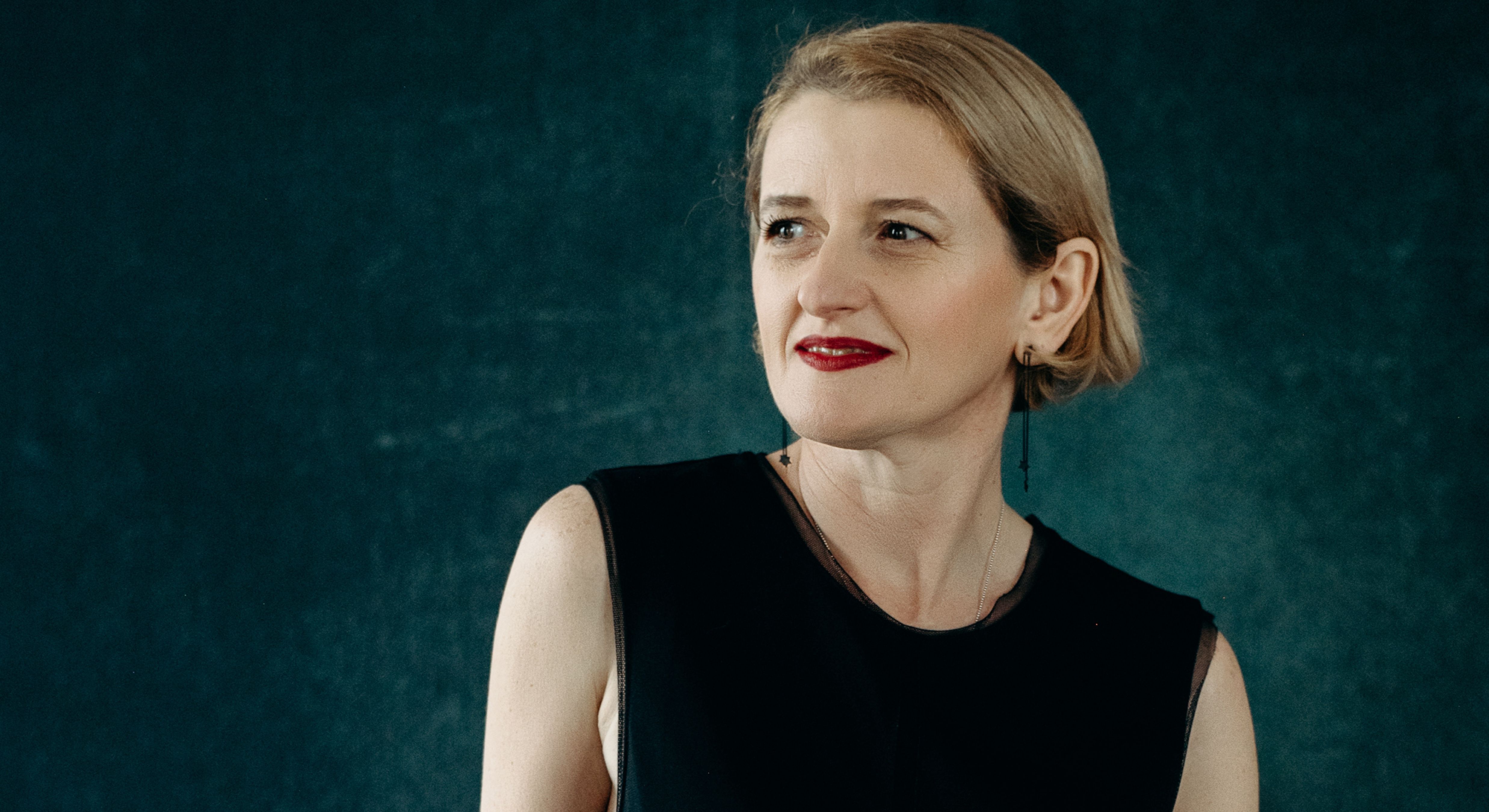
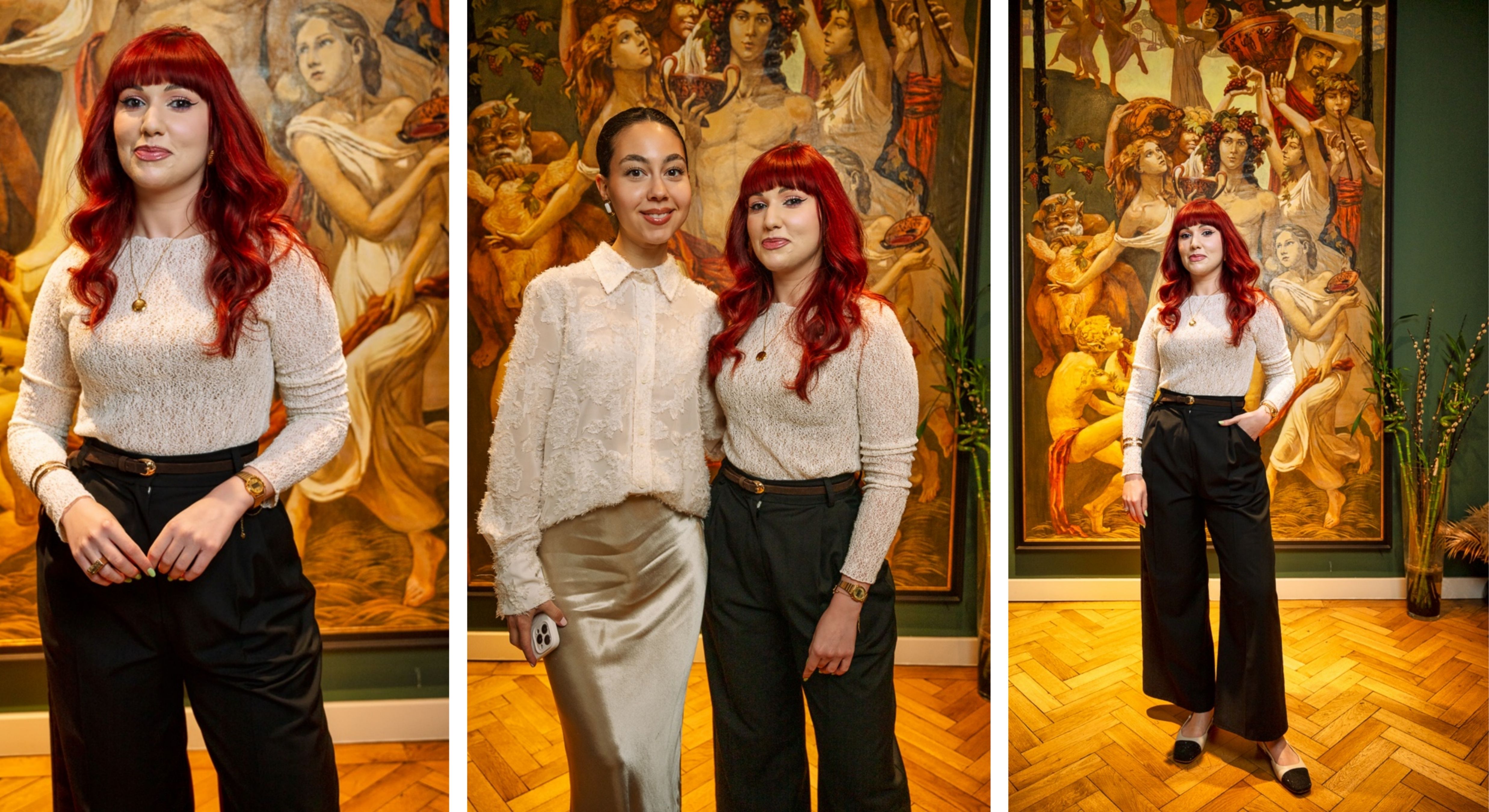
Some creatives chase scale. Juli chases impact. At 23, the Romania-based creative measures success in something deceptively small: improving the world by one percent. For her, creativity is not about decoration, but contribution - turning ideas into realities that leave a trace.
Her instinct for storytelling started early, filming imaginary teleshopping commercials and transforming ordinary objects into extraordinary inventions. What looked like play was, in fact, an early exercise in reframing reality.
1. WHAT WOULD MAKE YOUR SOUL SING? WHAT MAKES YOU HAPPY?
What truly makes my soul sing is people and the possibility of leaving something meaningful behind. I feel most alive when I can contribute, even in the smallest way. If I can improve the world by just one percent, personally or professionally, that is enough to make me deeply fulfilled.
Happiness, for me, comes from giving. From having the resources, the ideas, or the energy to offer something to someone else. When a thought turns into reality and that reality has a positive impact, that is where I feel aligned with my purpose.
In a world that sometimes feels like it is falling apart, I am driven by the quiet ambition to make something better. Even by one percent. Even in a small corner of it.
2. A CHILDHOOD STORY THAT ANNOUNCED THE CREATIVE PERSON YOU ARE TODAY
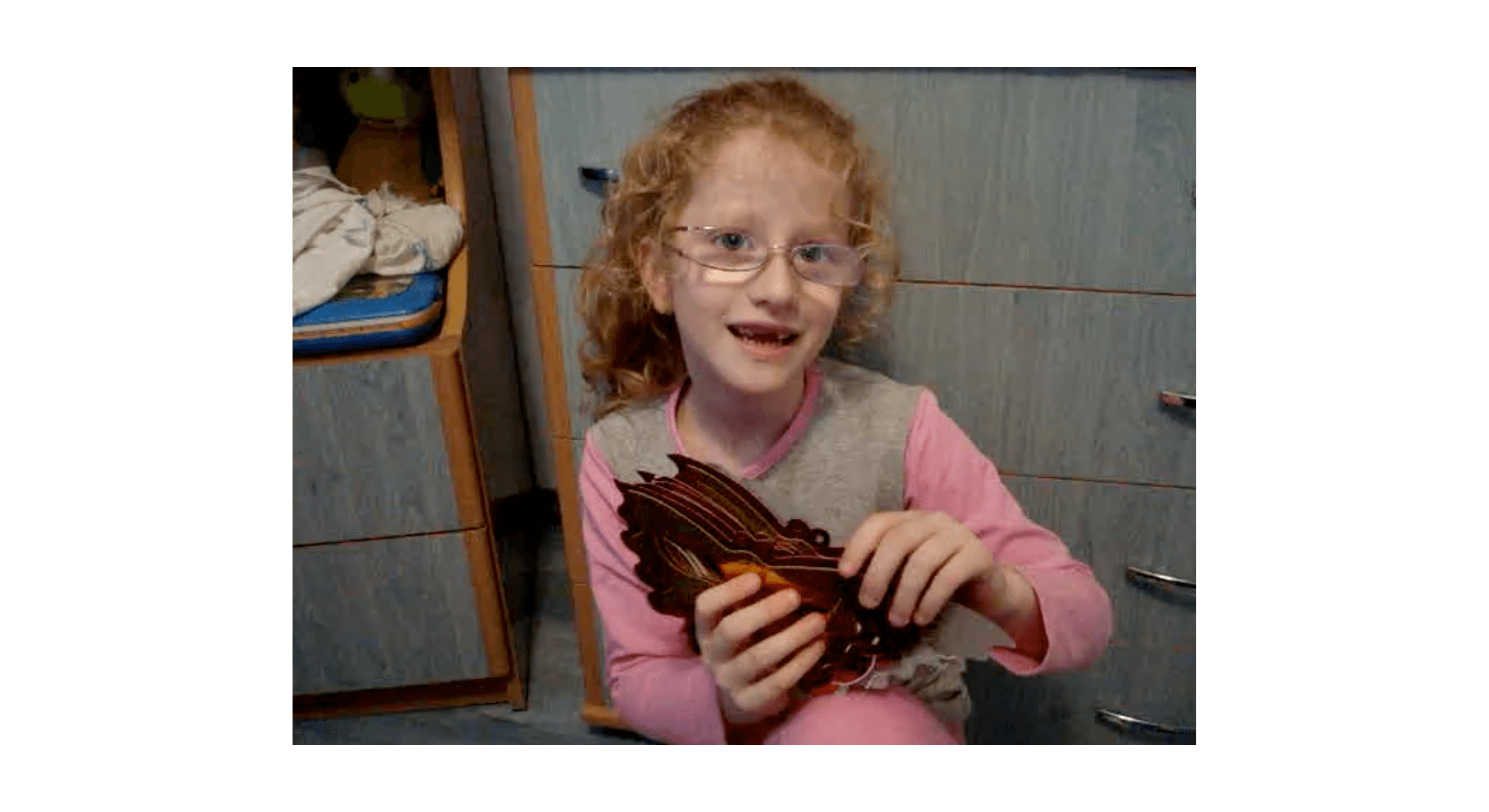
When I was little, my parents were often away, and I developed a rather unusual habit: I watched teleshopping channels for hours.
I was fascinated by miracle pans, miracle creams, miracle devices that promised to solve every problem in the world. Looking back, many of them were questionable at best, but what captivated me was not the product, it was the storytelling. The way ordinary objects were turned into something extraordinary.
At some point, I started recreating that world myself. My parents had a small digital camera, and I began filming my own commercials. I would take random objects from around the house, sometimes things that were not even products in any real sense, a sheet of paper, a stick, anything. And I would invent features, offers, benefits. I would build analogies and dramatic demonstrations. I even directed my mother once, filming her as she promoted one of my imaginary products, just like in the teleshopping shows.
As a child, I never saw objects as just objects. A clothespin could become a character. A piece of paper could become a revolutionary invention. Everything carried the potential for a larger story.
Looking back, I realize I was not just playing. I was reframing reality. I was learning that meaning is something you create.
3. BEST CONTEXT EVER FOR INSPIRATION WAS
Observation.
The most powerful context for inspiration, for me, has always been watching people. In cafés, in public spaces, in crowded rooms. I observe how people enter a space, how they gesture, how they speak, how they pause, how they react.
Human behavior is an endless source of nuance. And because people are infinitely diverse, inspiration never runs out.
4. THE PROJECT YOU LOVED MOST
One of the projects closest to my heart was created during my time at September Media agency: a fundraising event for Bethany Foundation called “Balul de la Castel,” a charity gala dedicated to supporting underprivileged children.
What I loved most was the opportunity to move beyond the clichés that often dominate fundraising campaigns involving children. Instead of relying on predictable emotional triggers, we worked around a central concept imagined by my colleagues, Unison, and I translated that into a visual language.
We built the identity around the idea of waves, the metaphor that good travels forward, that small acts of kindness ripple outward and grow. Visually, everything echoed that propagation of impact.
It was my favorite project because it combined meaning and creativity. It allowed me to design something beautiful that carried real consequence.

5. THE PROJECT OTHERS LOVED MOST
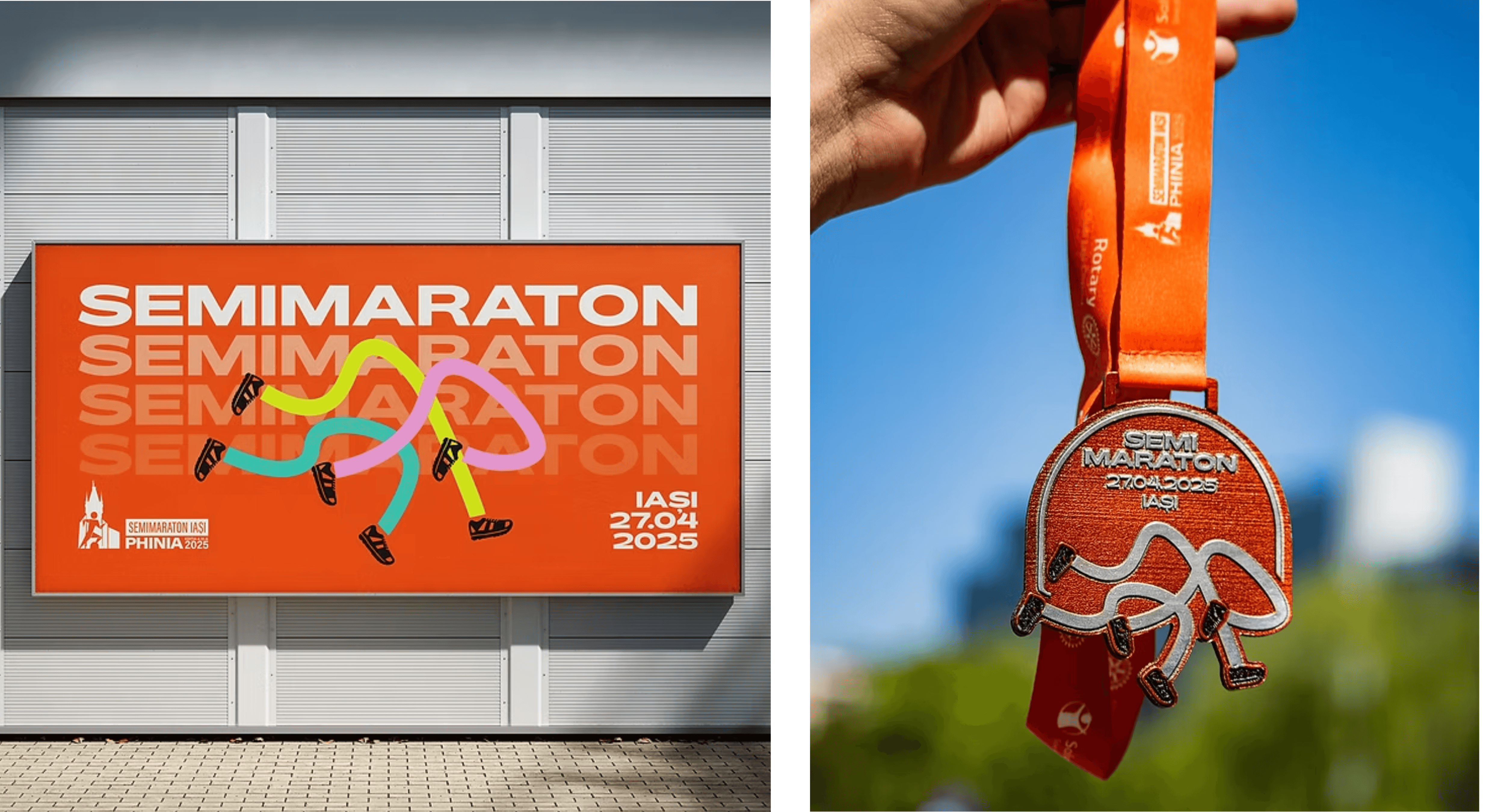
Another project that resonated strongly with the public was created for “Salvați Copiii Iași,” in the context of the local semi-marathon.
Instead of default sports imagery, I developed original characters, small animated “legs” that embodied movement, energy, and the spirit of running. The identity was dynamic, colorful, and highly adaptable across multiple environments.
People appreciated the coherence of the system and the playful yet strategic approach behind it. It felt fresh, alive, and distinct.
6. THE BEST THING ABOUT LOCAL CREATIVITY IS
The best thing about local creativity is adaptability rooted in cultural nuance.
Romanian creatives have learned to work with constraints. Limited budgets, unstable systems, shifting contexts. That pressure has shaped strategic agility. We think conceptually because we often have to. We cannot rely solely on scale, so we rely on insight.
There is also a strong sensitivity to social tension, irony, and subtext. That depth creates work that feels intelligent rather than decorative.
7. BEST STATEMENT OF LOCAL HUMOR
Romanian humor survives through irony.
We have a long tradition of laughing in situations where others might only complain. We often soften difficult realities with wit. There is a common expression, “a face haz de necaz”, which loosely translates to making humor out of misfortune. It says everything about how we cope.
We also say “lasă că merge și așa”, meaning “it works well enough,” a phrase that carries both irony and resilience. And when things go wrong, you might hear “ghinion”, said with a shrug that transforms frustration into dry comedy.
Our humor is layered, self-aware, sometimes self-deprecating.
It is not loud. It is subtle, sharp, and often disarming.
8. ADVICE FOR INTERNATIONAL HEADHUNTERS, RELATED TO LOCAL CREATIVES
Do not confuse scale with depth.
Many Romanian creatives grow in environments where resources are limited, feedback is direct, and results matter. That context shapes a particular kind of mind, one that learns to think conceptually before thinking cosmetically.
We are used to navigating ambiguity. To building systems from scratch. To working across disciplines because the market often requires it.
What you might see as “a small market background” is often a training ground for resilience, strategic clarity, and intellectual flexibility.
If you are looking for people who can operate without perfect conditions, who can think before they decorate, and who understand both constraint and possibility, you will find them here.
9. BEST PLACE IN THE CAPITAL
Bucharest is a city of contrasts.
For me, the most inspiring places are those where old architecture meets contemporary tension. Walking through layered neighborhoods feels like moving through multiple timelines at once.
The city reveals itself slowly. It rewards observation.
10. BEST PLACE IN YOUR COUNTRY
The mountains.
There is something grounding about Romanian mountain landscapes. They hold silence in a restorative way. Being there recalibrates perspective.
It is a place where scale becomes meaningful and ego becomes smaller.
11. MOST DISTURBING CLICHÉ ABOUT YOUR COUNTRY IN THE MEDIA OUTLETS OF THE WORLD
The persistent stereotype that Romanians are defined by crime or corruption is reductive and outdated.
Like many countries navigating complex transitions, Romania carries systemic challenges. But reducing an entire population to a negative narrative ignores the depth of cultural, intellectual, and creative contribution emerging from here.
Simplified media narratives rarely capture complex realities.
12. YOUR COUNTRY SHOULD BE KNOWN FOR
Romania should be known for intellectual ambition.
There is a powerful drive among many people here to transcend circumstance. To learn, to evolve, to build beyond inherited limitations.
You will find engineers, artists, strategists, researchers, and entrepreneurs who operate with remarkable depth and commitment.
That energy deserves more visibility.
13. YOUR VIEWS ON SPIRITUALITY
For me, spirituality is deeply connected to self-knowledge.
It is a catalyst for inner clarity. The more honestly you understand yourself, the more accurately you can understand the world around you.
Spirituality, in that sense, is not an escape from reality but a deeper immersion into it. It means looking beyond surface appearances and searching for meaning beneath visible structures.
It is the willingness to go deeper.

14. YOUR VIEWS ON MONEY
Money is not an end in itself. It is a means.
We live in systems where financial stability matters, and ignoring that would be naïve. But I do not see money as identity or worth.
In many ways, I resonate with Kant’s idea that people should always be treated as ends in themselves, never merely as means. I extend that logic to money. Money should serve human purpose, not replace it.
Resources become meaningful when they enable impact. When they allow you to build, to create, to support, to give back.
15. AN INSPIRATION SOURCE YOU RECOMMEND FOR A YOUNG CREATIVE
If I had to recommend one source of inspiration, it would be exposure.
Go to galleries. Attend stand-up comedy shows. Watch improv theatre. Sit in cafés. Observe people.
Books and films matter, but if you work in communication, everything ultimately revolves around human behavior.
Creativity grows where curiosity meets people.
16. A LOCAL BASED FEMALE TALENT THAT DESERVES TO BE PROMOTED AT INTERNATIONAL LEVEL
I would mention Diana Neagu.
I met her during the Young Lions competition, and what began as a professional encounter evolved into something deeply meaningful. Beyond being an exceptional creative, she became both a mentor and a friend.
What sets her apart is cognitive agility. She approaches challenges through lateral thinking and strategic divergence, constructing ideas that are both rigorous and bold. Her problem-solving is layered, disciplined, yet never predictable.
On a personal level, I am grateful that creativity brought us into the same space. It is rare to find someone who challenges you intellectually while supporting you generously.
She represents the kind of analytical, concept-driven creative spirit that deserves international visibility.

BIO
Hi, I’m Juli, a 23-year-old creative based in Romania. I was born with a small hole in my heart, not metaphorically, but literally, and I sometimes think that early fragility shaped the way I pay attention to what lies beneath the surface of things.
Growing up with two much older sisters, I often found myself somewhere between being protected and being on my own. I was a quiet, slightly clumsy child who preferred imagination to noise. I spent hours writing stories that later won school competitions, filling notebooks with fragments, experimenting with piano and violin, trying to understand how expression works in different forms. I was never defined by a single talent, but by curiosity.
At eighteen, I left Bucharest for Iași to prove to myself that the timid child could navigate a new city and build something independently. That decision led me into advertising and creative work at September Media, where storytelling found structure and purpose.
Since then, creating has remained my most constant way of growing.